
If you hear water running when every fixture is off, or your meter keeps turning, you need emergency leak detection in Hillside before a small leak becomes a ruined ceiling. Call the 24/7 line, shut off the main valve if water is visible, and a plumber will be lined up for a same-day visit when one is available.
Most people who call about a leak do not know where it is. They know the symptom: a stain on a ceiling, a warm patch on a floor, a bill that doubled, or a meter dial that moves with the water off. Leak detection is the work of turning that symptom into an address on a pipe.
When a hidden leak is an emergency
Call right away if water is coming through a ceiling, dripping near light fixtures, pooling in a basement, or running somewhere you cannot reach the valve. Turn off the main water shutoff first. Then switch off power to the wet area if you can do it from a dry spot.
A slow leak behind a wall can wait a day, but not much longer. Moisture feeds mold in as little as a few days, and drywall that stays wet loses strength. The sooner the source is found, the smaller the opening that has to be made.
Signs the leak is already costing you
- A water bill that jumps with no change in how many people live in the home.
- A meter dial or low-flow triangle that moves when every faucet and appliance is off.
- Brown rings or bubbling paint on a ceiling or the upper part of a wall.
- A hissing sound near a wall, a water heater or the main valve.
- A floor that feels warm or damp in one spot, or a musty smell in a basement or closet.
- Water pressure that drops without a clear reason.
How we find a leak without tearing things apart
The first step is a meter test. We shut every fixture off, read the meter, wait, and read it again. If the dial moves, water is escaping somewhere between the meter and your fixtures. If it holds still, the problem is more likely a fixture, a drain or a roof.
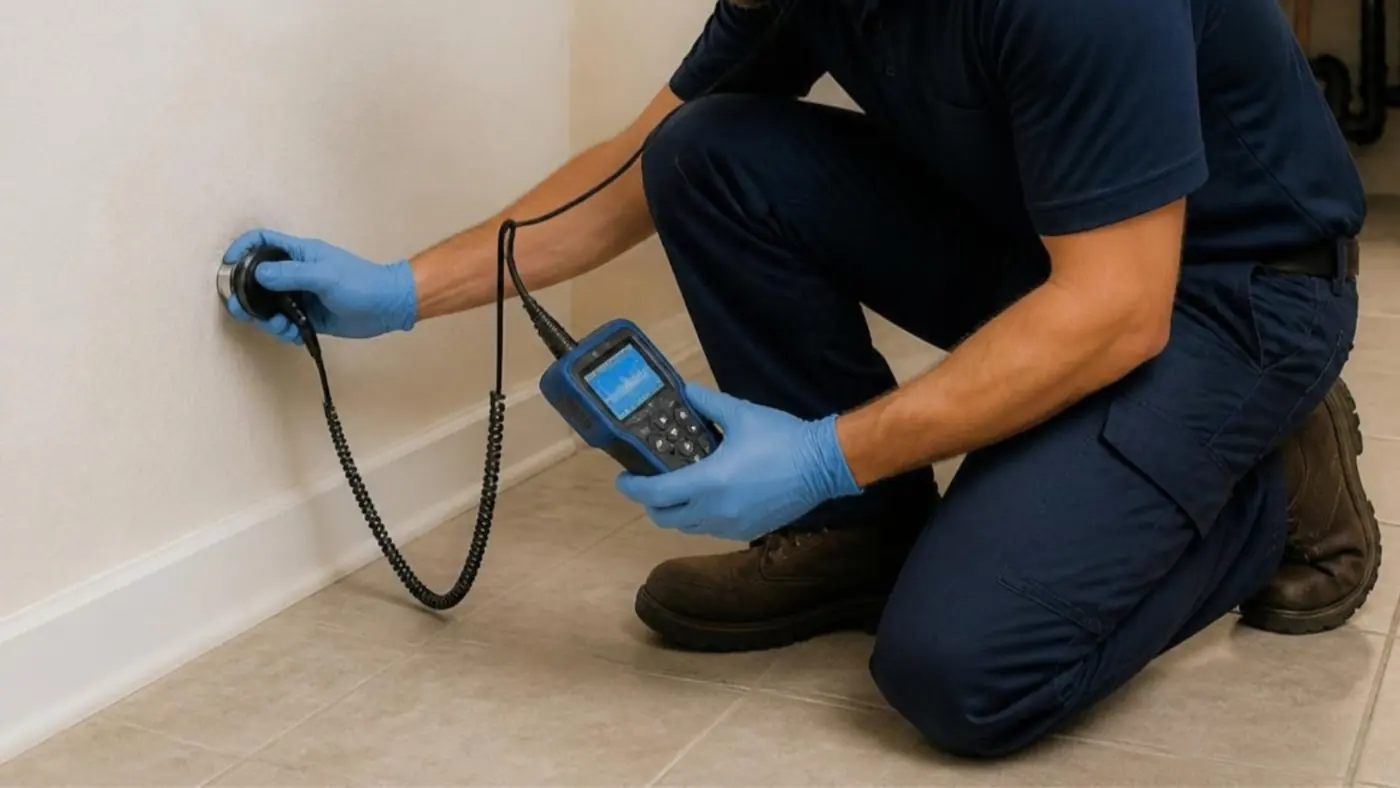
Next we split the system. Closing the main inside the house tells us whether the loss is in the line from the street or inside the walls. Pressure testing and acoustic listening gear then narrow the search to a few feet. Moisture meters and a thermal camera show wet drywall without cutting into it.
| Where the water shows up | Likely source | What we check first |
|---|---|---|
| Ceiling stain below a bathroom. | Supply line, drain or shower valve above. | Moisture map and pressure test of the bath. |
| Wet basement wall, dry weather. | Buried line or hose bib line. | Meter test, then listening along the wall. |
| Bill jumped, nothing visible. | Running toilet, water heater or buried leak. | Meter test with fixtures off. |
| Warm spot on a floor. | Hot water line in a slab or under the floor. | Thermal imaging and hot line pressure test. |
Water running with everything off? Call the 24/7 line.
☎ Call (908) 357-1542High water bill or a meter that will not stop
A bill spike is one of the most common reasons people call about leaks. Start with the cheap suspects. A toilet flapper that sticks open can waste hundreds of gallons a day without a sound, so lift the tank lid and check that the water stops. Then look at the water heater relief valve and any outdoor hose bib.
If those are clean, the leak is probably in a pipe. In Hillside the water comes from New Jersey American Water, and the utility owns the main and the meter. The line from the meter into your house belongs to you. A leak on that line is yours to fix, and it can run for months because the water goes into the ground instead of onto a floor.
Ceiling, wall and attic leaks
Water travels. A stain on a living room ceiling can start in the bathroom above and run along a joist before it shows. We trace it back by checking the shower valve, the tub overflow, the toilet supply and the drain trap, then the roof and exterior walls if the plumbing is dry. Fixing the stain without finding the source just means painting twice.
Basement, crawlspace and buried line leaks
Many Hillside homes are on basements, and the pipes that run along basement ceilings and walls are easy to inspect. A leak under a slab, in a crawlspace or in the yard is harder. Buried lines in older houses can be galvanized steel, copper or lead, and each fails in its own way. Listening gear finds the sound of escaping water through soil and concrete so the dig is small.
Irrigation lines and outdoor spigots are part of the same hunt. A split line behind a hose bib or a stuck sprinkler valve can account for a surprising share of a monthly bill, and the meter box in the yard sometimes hides a leak of its own.
What it costs to find and fix a leak
Leak detection is priced by how much searching the job takes, and repair is priced separately once we know what failed. These factors move the number most:
- How many floors and rooms the search covers.
- Whether the pipe is exposed or inside a finished wall or slab.
- The pipe material and how many fittings need replacing.
- Whether the visit falls at night, on a weekend or on a holiday.
- Whether a permit is needed. Ask the Hillside Building and Housing Department at (973) 926-5100 about permit rules for your project.
Many homeowner policies cover sudden water damage but not a leak that ran for months, so ask your insurer what yours covers and photograph everything before cleanup. For your real number, call (908) 357-1542 and you will hear the price before work starts.
Related work after the leak is found
Once the source is located, the fix depends on the pipe. A split copper line may need only a section replaced, while corroded steel often points to repiping. If the leak is a pipe that has let go entirely, burst pipe repair is the next step. A dripping fixture is a quick job under faucet repair.
What to do and what not to do while you wait
- Do not touch electrical outlets or switches near wet walls or ceilings.
- Do not walk under a ceiling that is bulging with water.
- Close the main valve and open a low faucet to drain the lines.
- Photograph the damage before anything is moved.
Standards and sources behind this page
The EPA WaterSense program publishes household leak guidance that matches the meter test described here. Repairs that follow detection are governed by the plumbing code in the New Jersey Division of Codes and Standards.
leak detection questions from Hillside homeowners
Yes. The line is open 24 hours a day, and leak calls with active water are treated as urgent. Call (908) 357-1542 and the dispatcher will tell you how to shut off water while a plumber is assigned.
Turn off every faucet and appliance, then watch the meter. If the dial or the small low-flow indicator moves, water is running somewhere. A plumber can then split the system to tell whether the loss is inside the house or on the line from the street.
Usually only small ones. Moisture meters, thermal imaging and acoustic listening point to a spot within a few feet, so the opening is made where the pipe actually is rather than across a whole wall.
Yes. Buried water lines can leak without any surface sign. A meter test that moves with the house valve closed points to the buried line, and listening equipment finds the spot through soil or concrete.
In Hillside, New Jersey American Water owns the main and the meter. The line from the meter to your home is generally the homeowner's. Ask the utility if you are unsure where your property line of responsibility starts.
Many policies cover sudden and accidental water damage but not gradual leaks or wear. Read your policy or call your agent, and document the damage with photos before anything is cleaned up.
Call us about active water and tell your landlord at the same time. Landlords can authorize the repair by phone, and the plumber will explain the cause so both sides understand what failed.
Hidden water can wait for no one. Call the 24/7 line and start with a meter test.
☎ Call (908) 357-1542