
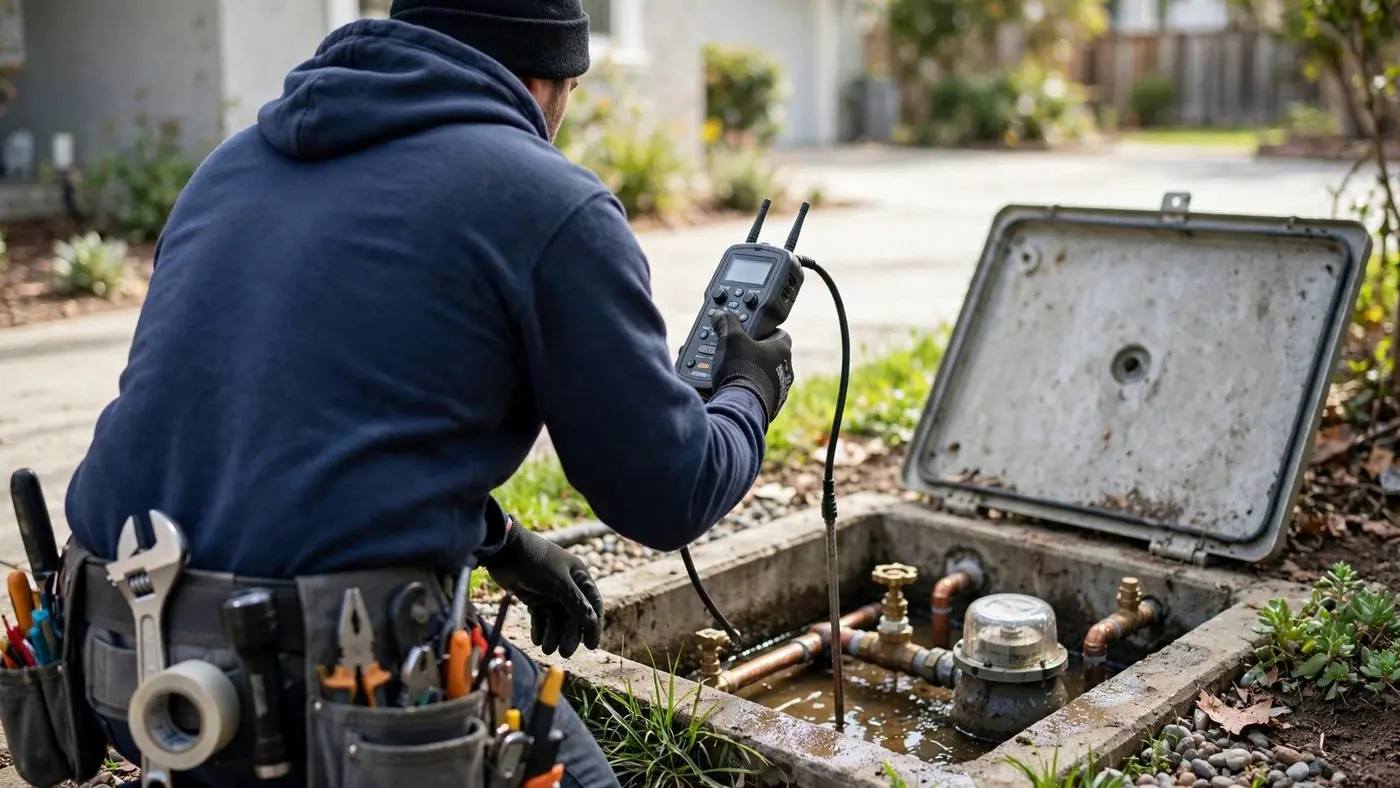
The fastest way to tell whether you have a leak is a meter test. Turn off every fixture and appliance, note the meter reading or watch the low flow indicator, wait an hour and check again. If the number moved, water is escaping. The next job is finding where.
This guide walks through the checks a homeowner can do in an afternoon. If you find water spreading or cannot find the source, call a plumber. A leak that has been running for weeks needs a trained eye and the right equipment.
Step 1: the meter test
- Stop all water useTurn off taps, the dishwasher, the washing machine and the ice maker.
- Read the meterNote the numbers or watch the small triangle or dial that spins with any flow.
- Wait an hourDo not use water during this time.
- Read againIf the reading moved or the dial spins, there is a leak.
Step 2: is it inside or outside?
Close the main shutoff valve inside the house, then check the meter. If it still moves, the leak is on the line between the meter and the house. If it stops, the leak is inside. That one test narrows the search to half the system. See water service line repair if the leak is outside.
Step 3: check the usual suspects
| Place | How to check | Common finding |
|---|---|---|
| Toilets. | Add food dye to the tank and wait 20 minutes. | Color in the bowl means a leaking flapper. |
| Under sinks. | Run a dry paper towel along pipes and connections. | Damp at a supply line or trap. |
| Water heater. | Look at the base and relief valve. | Drips or rust stains. |
| Outdoor faucets. | Look for wet soil or drips. | Worn washers. |
| Washing machine hoses. | Check behind the machine. | Bulges or damp at the connection. |
Cannot find it? Call for leak detection.
☎ Call (908) 357-1542Hidden leaks: where water goes
Water follows pipes and joists before it shows. A stain on a ceiling can be several feet from the source. Warm floor spots can mean a hot water line leaking in a slab. A musty smell without a stain suggests moisture inside a wall. These are the cases where equipment saves time.
What professional detection adds
A technician uses acoustic listening devices that pick up the sound of water escaping, a moisture meter to map wet drywall and a thermal camera to see temperature differences. Pressure testing isolates sections of piping. These tools let us open a small hole instead of a large one. See leak detection for our process.
Signs of a leak you should not ignore
- A sudden jump in your water bill.
- Bubbling paint or peeling wallpaper.
- The sound of running water when everything is off.
- Mold spots or musty smells.
- Low pressure that appears with no other cause.
Using your bill as a clue
Compare the last few bills. A steady rise suggests a leak that is getting worse, and a sudden jump points to a break. Divide the extra usage by the number of days to estimate the flow. Share the numbers with the plumber.
Leaks that do not show on the meter
A very slow drip can be too small to move the meter in an hour. If you suspect one, test overnight. Read the meter before bed, avoid using water and read it in the morning. Slow leaks hurt walls long before they hurt your bill.
Check the water heater and the washing machine
Look at the pan or floor under the heater, and inspect the connections at the back of the washing machine. Rubber hoses can bulge and fail. Replacing them with braided stainless hoses is a cheap upgrade. Close the washer valves when you go away on a trip.
A room by room walk through
Start in the basement, where pipes are exposed. Look along the joists for wet insulation, green stains on copper or white crust at joints. In the bathrooms, check around the tub, the shower valve and the base of each toilet. In the kitchen, open the sink cabinet and the dishwasher kickplate. Finally walk the attic and look at the ceiling below any roof penetrations.
Use your nose as well as your eyes. A musty smell in a closet or a cabinet often shows moisture before you see it. Press on soft spots in a floor or a wall, since softened material shows water damage.
When the leak is outside the house
A leak between the meter and the house can saturate the soil without any sign indoors. Walk the line between the street and the foundation. Look for a lush green strip in dry weather, a soft or sunken spot or water seeping at the foundation wall. If you find one, call before digging. Utility lines are buried nearby, and New Jersey law requires a call to the one-call marking service before excavation.
What to know in Hillside
New Jersey American Water supplies Hillside, and the utility owns the main and the meter. The line from the meter to the house is generally the owner's.
More than 79 percent of Hillside homes were built before 1960, per Union County's township profile, so older galvanized and copper pipes are a common source of pinhole leaks.
For permit questions on pipe repair, call the Hillside Building and Housing Department at (973) 926-5100.
Neighbors we serve
We also find leaks in Elizabeth and Newark's South Ward.
What to do while you wait
- Close the main valve if water is spreading.
- Move valuables away from wet areas.
- Photograph the damage for your insurer.
- Keep the area ventilated to slow mold.
Insurance and documentation
Keep your water bills, which show the jump in use, and take dated photos of damage. Many policies cover sudden leaks and exclude long running ones. A plumber's report on the cause helps your claim. Ask your agent what is covered before you start repairs.
Standards and sources behind this page
The EPA WaterSense program describes the same meter and dye tests used above. Before digging for an outdoor leak, the standard step is a mark out through New Jersey One Call.
Questions Hillside homeowners ask
Turn off all water use, note the reading, wait an hour and check again. A change means a leak.
Add food dye to the tank and wait twenty minutes without flushing. Color in the bowl shows a leak.
Yes. Warm spots on the floor and a running meter with nothing on can point to it.
Often only a small hole. Detection tools pinpoint the spot.
Generally the homeowner. New Jersey American Water owns the main and the meter.
Not sure it is a DIY job? Call the 24/7 line and a plumber will tell you straight.
☎ Call (908) 357-1542