
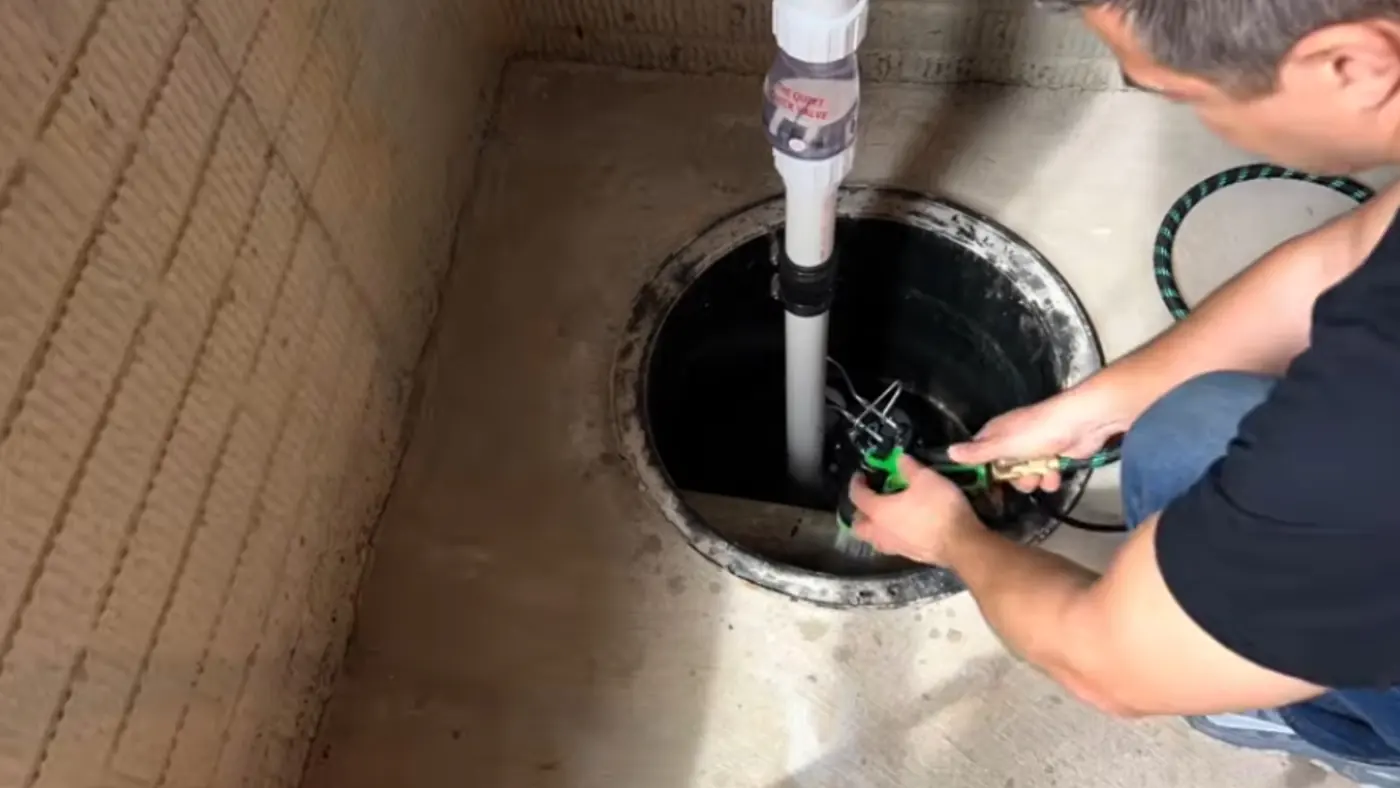
Replacing a sump pump in an existing pit is a job many handy homeowners can do in an afternoon. Installing a new pit, cutting the slab or wiring a new circuit is not. This guide covers the swap and where to stop and call a plumber.
If your pit is full right now and the pump is not running, call the 24/7 line and read the rest later. A flooded basement does not wait for a how to guide.
Choose the right pump
| Pump type | Best for | Trade off |
|---|---|---|
| Submersible. | Most basements, quiet and powerful. | Costs more. |
| Pedestal. | Narrow pits, easier access. | Louder, motor above the pit. |
| Battery backup. | Power outages in storms. | Needs battery checks. |
| Water powered backup. | Homes with good water pressure. | Uses a lot of water. |
A pump of one third to one half horsepower fits many homes. If the old pump ran nonstop in storms, ask a plumber to size the replacement, because an undersized pump will not catch up.
Step by step: swap the pump
- Unplug and drainUnplug the old pump and bail or pump the pit down.
- Disconnect the dischargeUnscrew the union or coupling and lift the pump out.
- Check the pitClear silt and stones so the float moves freely.
- Set the new pumpPlace it on a flat base, with the float clear of the walls.
- Fit a check valveInstall a check valve on the discharge so water does not run back into the pit.
- Test itFill the pit with a hose and watch the pump start, run and shut off.
The mistakes that cause floods
- A float that rubs the pit wall and sticks.
- No check valve, so the pump short cycles.
- A discharge that ends near the foundation and sends water back.
- A pump plugged into an extension cord or overloaded circuit.
- No backup for power outages.
Pit full and pump silent? Call now.
☎ Call (908) 357-1542Where the water goes
The discharge pipe must carry water well away from the house. Do not drain a sump into the sanitary sewer, which many towns prohibit. Ask your local office what the rules are before you plumb the discharge.
When to call a plumber
- The pit is cracked, missing or too shallow.
- You need a new pit cut into the floor.
- A new circuit or outlet is needed.
- The pump is a sewage ejector, not a sump pump.
- Flooding happens every storm and the pump is already large.
See sump pump installation and repair for the full service.
What size pit and what depth
A standard residential pit is about eighteen inches wide and two feet deep. A shallow pit makes the pump cycle on and off constantly, which wears it out. If your pit is too small, a plumber can replace it with a larger liner. Never run the pump dry, because it overheats.
Power and safety
- Use a dedicated outlet with a ground fault interrupter.
- Do not use an extension cord.
- Keep the cord out of the water and above the pit rim.
- Label the breaker so anyone can find it during a storm.
If your outlet is not grounded or does not exist, call an electrician. A wet basement and bad wiring are a dangerous mix.
Testing under load
After installation, fill the pit with a hose until the float lifts. Watch the water level drop and the pump shut off. If the pump short cycles, the check valve may be missing. If it runs and the level does not fall, the discharge may be blocked or the impeller jammed.
What a pro adds that a DIY swap misses
A plumber checks the whole system, not only the pump. That means the condition of the pit, the check valve, the discharge pipe, the outlet and the path of the water outside. A new pump plugged into a bad system can fail as fast as the old one. If the old pump died young, find out why before you buy the next one.
How often to replace your pump
Plan to replace a sump pump every eight to ten years even if it still runs. Pumps fail without warning, and the failure usually comes during a storm. A pump that is noisy, cycles often or vibrates is already asking for attention.
Alarm options
A high water alarm warns you when the pit is rising and the pump is not keeping up. Simple battery alarms sit on the pit rim, and smart models send a phone alert. If you travel or the basement is finished, an alarm is cheap insurance. Test it each spring with the pump.
A realistic time and tool list
A pump swap takes two to three hours for a first timer. You need a bucket, pipe wrenches, PVC primer and cement if you cut pipe, a hacksaw, a tape measure and a flashlight. A wet vacuum helps clear the pit. Have the new pump, a check valve and fittings ready before you start so you are not without a pump for long.
What to do if the pump fails in a storm
Move valuables up, turn off power to the basement outlets if water reaches them, and call. A temporary utility pump with a garden hose can buy time, but it needs power and a safe place to discharge. A plumber can put in a working pump during the storm in many cases.
What to know in Hillside
Call the Hillside Building and Housing Department at (973) 926-5100 and ask whether a permit or inspection applies to a sump installation, and where discharge is allowed on your lot.
Union County's township profile says more than 79 percent of Hillside homes were built before 1960. Many older foundations have a pit added after the house was built, so the pit may be small or oddly placed.
Standard homeowners policies often exclude flood and sump failure unless you add coverage. Check your policy before the next storm.
Neighbors we serve
The same pump rules apply in Irvington, where basements near the Elizabeth River take on water in heavy rain, and in Newark's South Ward.
Maintenance
- Pour a bucket of water into the pit twice a year to test the pump.
- Clean the pit and the pump intake each spring.
- Test the battery backup and replace the battery every few years.
- Keep the discharge outlet clear of leaves and ice.
Standards and sources behind this page
Pump piping and discharge follow the plumbing code described by the New Jersey Division of Codes and Standards, and flood coverage questions can start with the FEMA Flood Map Service Center.
Questions Hillside homeowners ask
About ten years is common. Heavy use shortens it.
Rules vary. Ask the Hillside Building and Housing Department at (973) 926-5100 before you start.
Yes. Without one, water in the discharge pipe falls back into the pit and the pump cycles constantly.
If your basement floods in outages, yes. Storms often cut power exactly when the pump is needed.
In many towns this is not allowed. Ask the local office about your lot.
Not sure it is a DIY job? Call the 24/7 line and a plumber will tell you straight.
☎ Call (908) 357-1542