
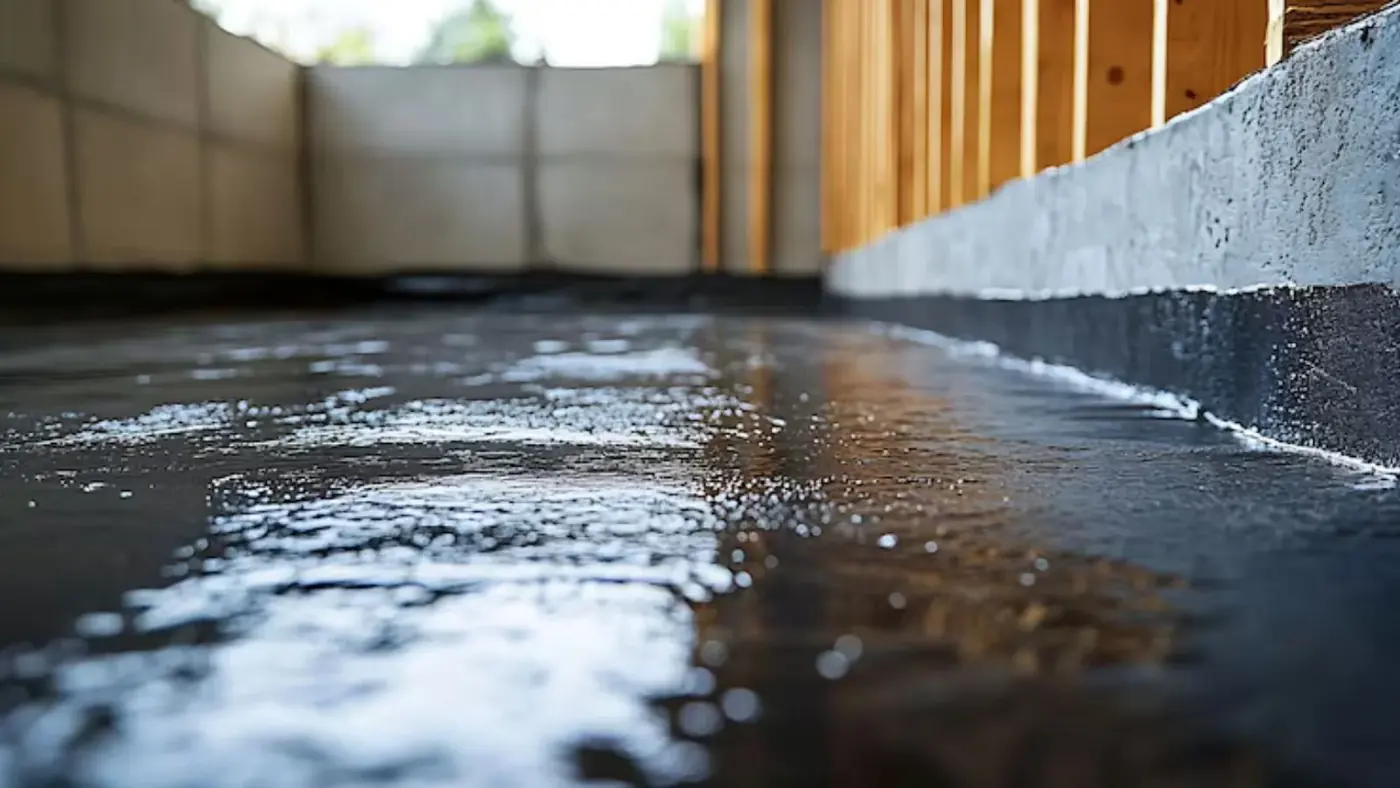
Most wet basements are fixed from outside the house, not inside. Before you buy any sealant, find where the water comes from. Gutters, grading, a failed sump pump and a leaking pipe all look the same on a damp floor, and only the right fix works.
This guide covers the do it yourself steps worth your time and the points where a plumber is the safer call. If water is already standing in the basement, jump to the sump section and call the 24/7 line.
Step one: work out where the water comes from
| What you see | Likely source | First test |
|---|---|---|
| Water at the wall base after rain. | Groundwater or roof runoff. | Check gutters and grading. |
| Damp floor in dry weather. | A leaking pipe. | Run a meter test. |
| Water from the floor drain. | Sewer backup. | Check the main line. |
| White powder on walls. | Moisture passing through masonry. | Dry the wall, then seal. |
A simple meter test settles whether a pipe is leaking. Turn off every fixture, read the meter, wait an hour and read it again. If the number moved, call for leak detection before spending on waterproofing.
Fixes you can do yourself
- Clean gutters and extend downspouts several feet from the foundation.
- Regrade soil so it slopes away from the house.
- Seal small cracks with hydraulic cement or a flexible crack filler.
- Use a dehumidifier to keep air dry and stop mold.
- Move stored items onto shelves off the floor.
These steps cost little and stop many leaks. They do not fix pressure from groundwater under the slab, which needs a drain system.
Paint and sealers: what they can and cannot do
A masonry waterproofing paint can slow damp that comes through a wall. It cannot stop water pushing through under pressure, and it will peel if the wall is wet. Apply it only to a dry wall in a dry season. If the wall peels within a year, the water is coming from outside and the paint is hiding it.
Water standing in the basement? Call the 24/7 line.
☎ Call (908) 357-1542When to call a plumber
- Water comes up through the floor drain or a floor crack.
- A sump pit overflows or the pump will not run.
- Repeated flooding after storms.
- A pipe is leaking inside a wall or the slab.
- You need an interior drain, a new sump or a backwater valve.
Interior drains and sump systems are a plumber's work. See basement waterproofing and sump pump service for what the job involves.
Sump pumps and backwater valves
A pump moves water out of the pit, and a backwater valve stops sewage flowing back in. Both need a permit in many places, and the discharge must run away from the house. Ask the local office before you start.
How to check your gutters and grading
Walk around the house during a heavy rain. Look at where the downspouts end, whether gutters overflow and whether water pools against the foundation. Soil should fall away from the wall by about an inch per foot for the first several feet. Fill low spots with compacted soil, not mulch, which holds water.
Window wells are another quiet source of basement water. If a well fills with leaves and rain, the water rises to the window frame and seeps in. Clean the wells, check the drain at the bottom and fit a clear cover.
How much humidity is too much
A basement that feels clammy but has no puddles may have a humidity problem rather than a leak. A cheap hygrometer shows the level. If the humidity stays high, run a dehumidifier and look for a cold water pipe that is sweating. Insulating cold pipes stops the drips that look like leaks.
Signs that a DIY fix is not enough
A single damp patch after a very heavy storm is one thing. Water on the floor several times a year is another. Look for a pattern: if the same corner gets wet every time, there is a path for water, and it will keep finding it. Keep a simple log of dates and rainfall. When you speak to a plumber or contractor, the log is more useful than a description.
What to store and what to move
Until the water is solved, treat the basement floor as wet. Keep boxes on shelves, move electronics and papers upstairs and raise the water heater or washer if the floor has flooded before. Cardboard soaks water and grows mold, while plastic bins on blocks survive a small flood.
Crack repair: how to do it properly
Chip away loose material, brush the crack clean and flush it with water. For a hairline crack, a flexible polyurethane sealant works. For a wider one, hydraulic cement expands as it sets and plugs flowing water. Press it in firmly and hold it for the time on the label. Repair cracks from the inside only as a stopgap if they move after rain, because the force of the water is still outside.
Cost thinking: where to spend first
Spend nothing on the cheap fixes and watch what happens in the next two storms. If the basement stays dry, you saved a lot. If it does not, get a quote for drainage and a pump. Compare quotes on what they include, such as the pit, the pump, a backup, the discharge and any permit. A low price that leaves out the backup often costs more later.
What to know in Hillside
Hillside is about 2.78 square miles in Union County, and more than 79 percent of its homes were built before 1960, per the Union County township profile. Older block and stone foundations are porous and many have no modern drain tile.
The Hillside Building and Housing Department is at (973) 926-5100. Call before you install a sump, drain or backwater valve and ask whether a permit and inspection apply.
New Jersey American Water supplies Hillside. A water bill that jumps with no change in use points to a leak, not groundwater.
Nearby
Basements in Irvington, where the Elizabeth River runs through the township, and in Newark's South Ward have similar issues. The same fixes apply.
A realistic order of work
- Fix the outsideGutters, downspouts and grading.
- Test for pipe leaksRun the meter test and look for stains.
- Seal and drySmall cracks and a dehumidifier.
- Add drainage if neededCall a plumber for a sump or interior drain.
Standards and sources behind this page
Flood risk for your address can be checked on the FEMA Flood Map Service Center. Drains, sumps and backwater valves follow the plumbing code in the New Jersey Division of Codes and Standards.
Questions Hillside homeowners ask
You can improve it. Gutters, grading and small crack repair often help. A true groundwater problem needs a drain and sump system.
It slows dampness through a dry wall. It will not stop water under pressure and it peels when the water is behind it.
Run a meter test with all fixtures off. If the meter moves, a pipe is leaking.
Call the Hillside Building and Housing Department at (973) 926-5100 to ask. Rules depend on the work.
Seepage is usually excluded. Ask your agent about flood and sewer backup coverage.
Not sure it is a DIY job? Call the 24/7 line and a plumber will tell you straight.
☎ Call (908) 357-1542