
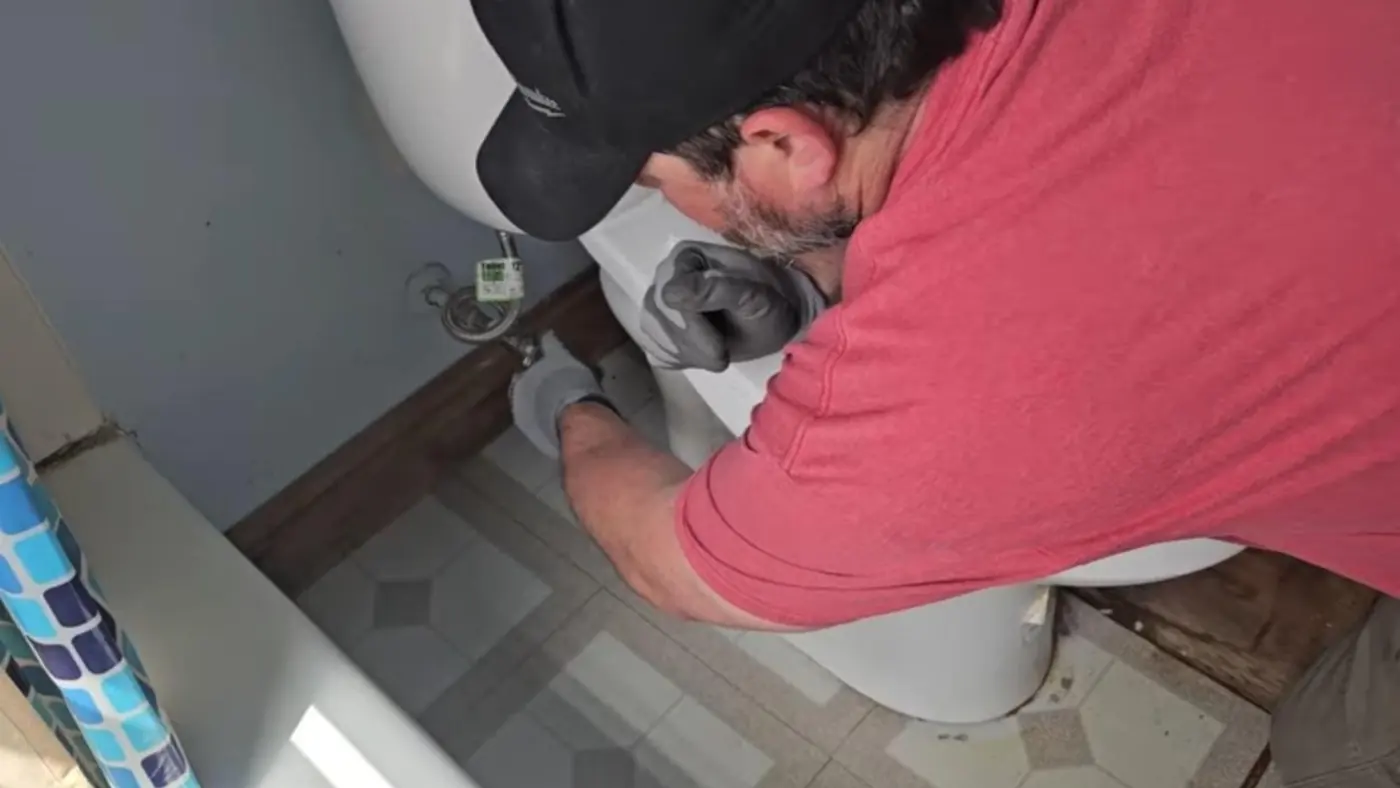
Most clogged toilets clear with a flange plunger in under five minutes. Use the right plunger, make a good seal and push down slowly. If the water will not drop after a few tries, stop forcing it. Close the supply valve behind the toilet so it cannot overflow.
If sewage appears in a tub or the toilet gurgles when the washer runs, the clog is in the main line and no plunger will fix it. That needs sewer line cleaning.
What you need
- A flange plunger, which has a rubber collar, not a flat cup.
- Rubber gloves and old towels.
- A closet auger, if the plunger fails.
- A bucket, in case the bowl is too full.
How to plunge a toilet
- Reduce the waterIf the bowl is nearly full, scoop some out. If it is low, add water to cover the plunger.
- Seat the plungerFit the collar into the drain opening and make a tight seal.
- Push slowlyPush down gently first to push out the air, then pump firmly in and out.
- Check the waterAfter ten or fifteen strokes the water should drop. Repeat once or twice.
- Flush to testWait for the tank to fill, then flush once and stand ready to close the valve.
If plunging fails
A closet auger is made for toilets. It has a curved guard so it will not scratch the porcelain. Feed the end into the drain, crank the handle and pull out whatever catches. Do not use a drain snake meant for sinks, because it can scratch the bowl.
Skip chemical drain cleaners in a toilet. They can sit in the bowl, damage the wax ring and splash on you when you plunge. If one has already been used, tell the plumber.
| Sign | What it means | Next step |
|---|---|---|
| Water rises slowly and drains slowly. | Partial clog in the toilet trap. | Plunge or auger. |
| Toilet bubbles when others drain. | Partial block in the main line. | Call for line cleaning. |
| Several fixtures back up at once. | Main line blocked. | Stop water use and call. |
| Toilet clogs every few days. | Worn flush mechanism or a belly in the line. | Camera and repair. |
Toilet overflowing now? Call the 24/7 line.
☎ Call (908) 357-1542What causes repeat clogs
Wipes, even ones sold as flushable, are the top cause. Older toilets that use a lot of water per flush can also clog less often than low flow models that were installed badly. A toilet that is loose on the floor can leak at the wax ring. If clogs keep coming back, see toilet repair and installation.
Using a closet auger correctly
Pull the auger's handle back so the cable is retracted, then feed the curved end into the toilet drain. Push gently until you feel resistance, then crank the handle while pushing. Pull the cable back out slowly. If it brings up a toy or a wad of paper, flush to test. If the auger turns freely and the bowl still will not drain, the clog is past the toilet.
Items that need a plumber, not a plunger
A child's toy, a bottle cap or a hairbrush in the toilet can wedge in the trap. Forcing it with a plunger can lodge it tighter. A plumber can pull the toilet and remove the object from underneath, which is safer for the porcelain than hours of plunging.
After the clog: check for leaks
An overflowing toilet can push water out around the base. After clearing a clog, dry the floor and check for water at the base over the next day. A damp patch means the seal has failed and the toilet needs resetting with a new wax ring.
Why not just flush again?
The urge to flush a second time is strong, and it is the mistake that floods bathrooms. A toilet tank holds enough water to overflow the bowl if the drain is blocked. Wait. If the level is dropping slowly, the clog is partial and may clear by itself. If it is not dropping, lift the tank lid and close the flapper to stop more water entering.
Homemade fixes: what works and what does not
Hot water from the tap, not boiling, with a little dish soap can loosen a partial clog. Pour it from waist height and wait twenty minutes. Boiling water can crack the porcelain, so do not use it. Baking soda and vinegar fizz but rarely move a real clog, and they do not replace a plunger.
How a healthy flush behaves
A good flush sends water around the rim, fills the bowl, then pulls the contents through the trap in a few seconds and refills quietly. If yours is lazy, check the tank for a flapper that closes early and the rim holes under the lip for mineral buildup. A small mirror and a wire hanger or a brush clears rim holes, and a worn flapper costs little to replace.
Teaching kids and guests
A note by the toilet saves calls. Tell household members that only paper and waste go down, and that wipes go in the trash even if the pack says flushable. Rental properties benefit from a small sign, since guests do not know the pipes are old.
What to know in Hillside
More than 79 percent of Hillside homes were built before 1960, per the Union County township profile. Old homes can have cast iron drain lines that roughen with age and catch paper and wipes.
In a two-family house, a clog in the shared stack can show in the upper unit first. Tell your landlord at the same time as you call us.
For permit questions on a toilet or drain replacement, call the Hillside Building and Housing Department at (973) 926-5100.
Neighbors we serve
Clogged toilets are also common calls in Elizabeth, where many two- to four-family buildings share a stack, and in Maplewood, where tree roots enter older sewer lines.
Preventing the next clog
- Flush only toilet paper and waste.
- Keep wipes, floss and paper towels out of the toilet.
- Use a high quality paper that breaks up.
- Replace a worn flapper so the flush is strong.
Standards and sources behind this page
The EPA WaterSense program lists the flush volume standard for labeled toilets, which helps if you are thinking about replacing a toilet that clogs often. Pipe work behind the wall follows the state code in the New Jersey Division of Codes and Standards.
Questions Hillside homeowners ask
A flange plunger seals better because the collar fits the toilet drain. A flat plunger often fails.
We advise against it. It can damage seals and splash back, and it does not clear wipes.
Air is being pushed through a partly blocked line. It often means the main line is clogging.
A clog low in the shared stack backs water to the lowest fixture that has a free path, which is often the first floor, but upper units can show gurgling first.
Call the landlord and, if it is urgent, call us. We can start the repair when the landlord approves.
Not sure it is a DIY job? Call the 24/7 line and a plumber will tell you straight.
☎ Call (908) 357-1542